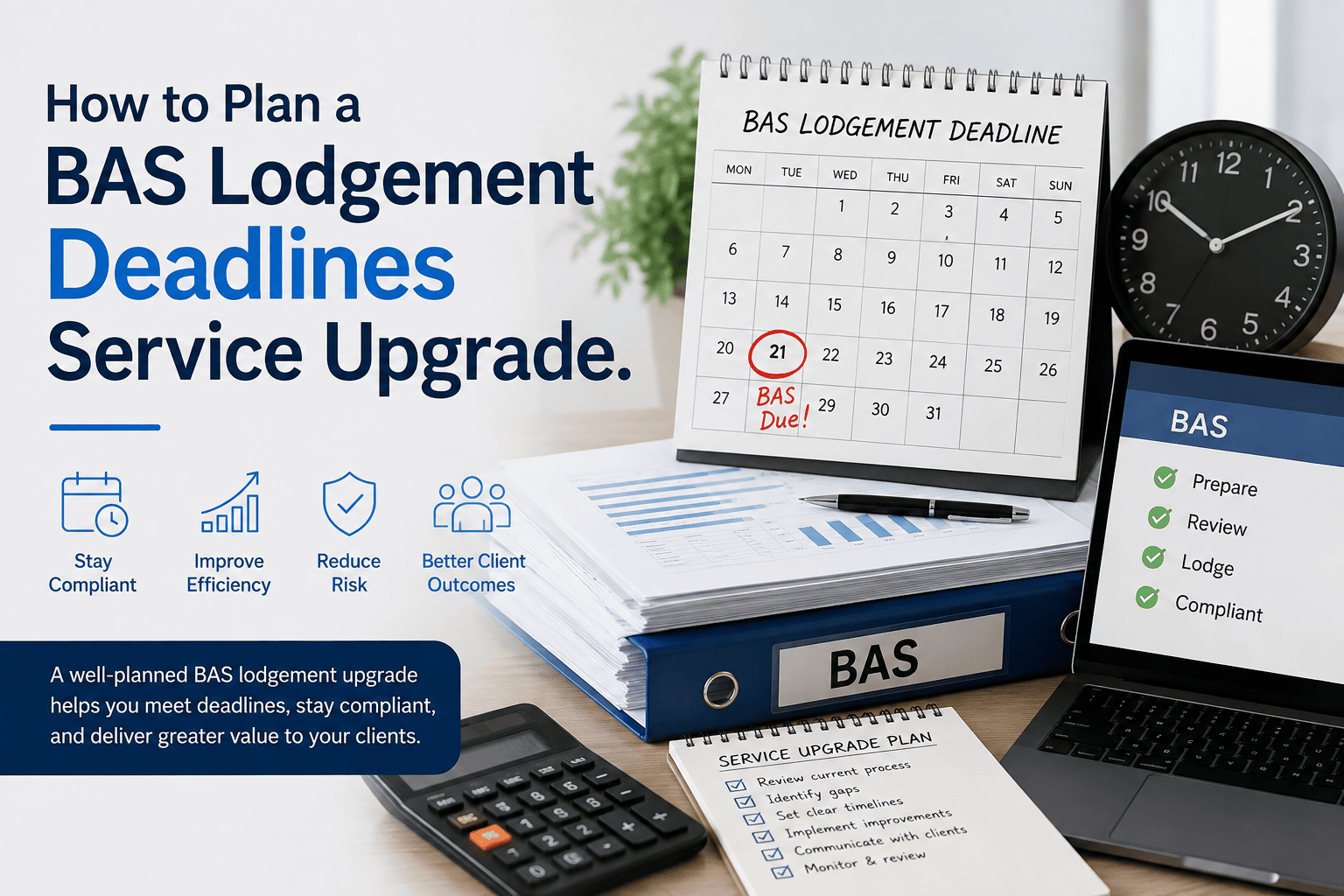
Running a business in Australia means more than making sales. You also need to meet your tax deadlines. One of the most important tasks is lodging your BAS lodgement deadlines in Australia on time.
The Australian Taxation Office (ATO) asks businesses to prepare a Business Activity Statement (BAS). This is to show how much GST you collected and how much GST was paid. It also shows how much PAYG withholding tax is important for reporting purposes. If you miss the BAS submission date, you may face
You have to adhere to the GST reporting obligations. Small businesses are usually busy with customers, employees, and everyday work. For this, they can miss dates. A minor delay can lead to high costs that are avoidable. These are the approximate dates for quarterly deadlines according to the Australian Taxation Office.
Common Quarterly BAS Due Dates (Self-Lodged)
Let’s take an example of a café owner who operates in an area such as Melbourne. The café has been extremely busy during the festive season, so the owner thinks of lodging the BAS the following week but forgets to do it. A couple of weeks later, the ATO sends a notice about the penalty and interest. As a result, the café has to pay penalties.
Australian Taxation Office (ATO) says that businesses must lodge their BAS on time even if there were no activities during that period. Missing the deadline will result in FTL penalties. From this blog, you will get to know about ATO BAS penalties.
A Business Activity Statement (BAS) is a tax report. Businesses send it to the ATO. It shows the government the taxes your business collects and pays. Most businesses registered for GST must lodge a BAS.
A BAS may include:
| Tax Type | What You Report |
| GST reporting | GST collected and GST paid |
| PAYG withholding | Tax withheld from employee wages |
| PAYG instalments | Income tax instalments (if required) |
| Other tax obligations | Fuel tax credits or luxury car tax (where applicable) |
The information depends on your business and your ATO registration.
Most businesses registered for GST must lodge a BAS. Generally, you must register for GST if your annual turnover is $75,000 or more. Different rules apply to some organisations, such as non-profits.
Common businesses that lodge BAS include:
Even if your business has no sales during the reporting period, you usually still need to lodge a BAS.
Your BAS due dates depend on how often you report to the ATO. Most small businesses lodge quarterly. Some larger businesses lodge monthly. A few eligible businesses may lodge annually.
| Quarter | Reporting Period | Standard Due Date |
| Quarter 1 | July – September | 28 October |
| Quarter 2 | October – December | 28 February |
| Quarter 3 | January – March | 28 April |
| Quarter 4 | April – June | 28 July |
These are the standard quarterly BAS due dates for many Australian businesses. If your BAS is lodged through a registered tax or BAS agent, you may receive extra time in some cases.
Lodging your BAS on time keeps your business compliant.
It also helps you:
Many business owners only think about BAS when the due date is close. A better approach is to update your bookkeeping every week. Small, regular updates make BAS preparation much easier.
GST reporting is one of the biggest parts of your BAS. When you sell goods or services, you may collect GST from your customers. You also pay GST when buying products or services for your business.
Your BAS reports both amounts.
| GST Item | Example |
| GST Collected | GST charged on customer sales |
| GST Paid | GST included in business purchases |
The difference determines whether you pay the ATO or receive a refund. Good bookkeeping makes GST reporting obligations much easier to manage.
If you have employees, you also need to report PAYG withholding. This is the tax you deduct from employee wages before paying them. You collect the tax on behalf of the ATO and report it through your BAS. Accurate payroll records help ensure your BAS is correct and reduce the risk of errors.
Many businesses receive ATO notices because of simple mistakes. Most of these errors can be avoided with good record keeping. You have to understand BAS due dates for small businesses.
Using one bank account for both business and personal spending makes bookkeeping confusing. It also increases the chance of reporting the wrong GST amount.
Tip: Use a separate business bank account and business credit card.
You usually need valid tax invoices to claim GST credits. Missing invoices may mean you cannot claim all the GST you have paid. Store invoices digitally so they are easy to find.
Some products include GST, while others do not. Entering the wrong GST amount can lead to mistakes in your BAS. Good accounting software helps reduce these errors.
Many business owners leave their BAS until the due date. This creates stress and increases the chance of mistakes. Updating your books every week makes BAS preparation much easier.
Missing BAS lodgement deadlines in Australia can become expensive.
The ATO may apply:
| Consequence | What It Means |
| Failure to Lodge (FTL) Penalty | A fine for lodging your BAS late. |
| General Interest Charge (GIC) | Interest charged on unpaid tax. |
| Extra ATO Reviews | Your business may receive more compliance checks. |
| Cash Flow Problems | Paying penalties can affect your business budget. |
The longer you wait, the more the costs may increase. If you know you cannot lodge on time, contact the ATO or your registered BAS agent as early as possible.
The ATO uses Failure to Lodge (FTL) penalties. ATO BAS penalties apply when businesses submit their BAS late. The amount is decided on the size of your business. It also depends on how late the BAS is lodged.
If tax remains due, the ATO may also charge the General Interest Charge (GIC) until the amount is paid. If you pay on time, you can avoid the extra cost.
Staying aware makes BAS much easier. Here are some simple practices that help.
| Simple Habit | Benefit |
| Update bookkeeping every week | Less work at BAS time |
| Save every invoice | Easier GST claims |
| Check bank transactions monthly | Fewer mistakes |
| Set calendar reminders | Never miss a deadline |
| Work with a BAS agent | Extra support and accuracy |
Small habits throughout the year save time and reduce stress.
Many small businesses choose to work with a registered BAS agent. A BAS agent understands current tax rules and helps prepare accurate reports.
They can:
Many registered BAS agents can also receive extended lodgement dates for eligible clients.
Sarah owns a small plumbing business in Brisbane. During her first year, she managed her own bookkeeping. She waited until the week before each BAS due date. She often searched through piles of invoices and worried about making mistakes.
The following year, she started updating her records every Friday. She also worked with a BAS agent who checked her reports before lodging.
Her BAS was completed earlier, her records became more organised, and she avoided late fees. She also spent less time on paperwork and more time growing her business.
Good records make BAS reporting much easier.
They help you:
Many accounting programs also connect directly with bank accounts. This helps keep records accurate throughout the year.
Meeting BAS lodgement deadlines in Australia is important. Lodging your BAS on time helps you avoid ATO BAS penalties. You can also avoid interest charges and unnecessary stress. It also keeps your business records accurate. It makes tax time much easier.
Quarterly BAS due dates should be kept in mind. Good bookkeeping is the key to easy BAS reporting. You need to update your records regularly. Keep all tax invoices and track your GST reporting and PAYG withholding. Small tasks completed each week are much easier. It is better than rushing to finish everything before the deadline. Freedom Tax Agency is a reliable company that offers you affordable tax-related services.
If you do not have a clear idea of BAS or tax obligations, speak with a registered BAS agent or accountant. Professional support can help you avoid mistakes. It helps you stay compliant with ATO requirements. A little planning today can save you time, money, and stress in the future.
You may get ATO BAS penalties and interest charges. Lodging your BAS quickly can help reduce future costs.
Most small businesses lodge their BAS every three months. They use the standard quarterly BAS due dates.
Yes. In most cases, you must still lodge your BAS even if your business had no income during the reporting period.
A BAS usually includes GST reporting, PAYG withholding, and other tax information that applies to your business.
Yes. A registered BAS agent can prepare and lodge your BAS correctly and help you meet all GST reporting obligations.